


Tadeusz Kantor
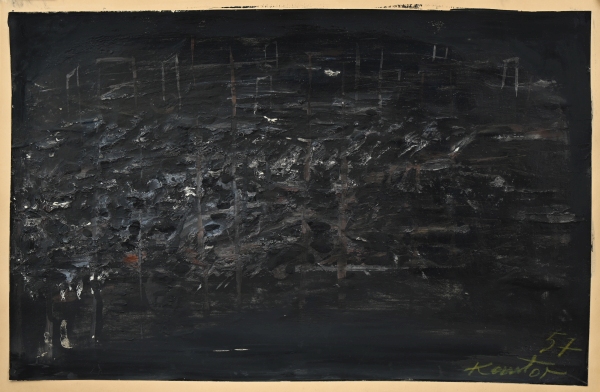
Dekoracja informelle nr 10, z cyklu Różne, 1957
technika mieszana, papier
Eustachy Kossakowski
Panoramiczny happening morski Tadeusza Kantora, 1967/2017
fotografia czarno-biała, druk cyfrowy, papier barytowany
Własność Muzeum w Koszalinie
Tadeusz Kantor łączył w twórczości plastykę i teatr, upłynniając granicę między tymi dwoma obszarami. W 1955 roku odbył podróż do Paryża, gdzie zapoznał się z rozpowszechnionym wówczas w krajach Europy Zachodniej informelem. Swoje doświadczenia z nową sztuką szerzył w formie odczytów i publikacji, umacniając tym samym wizerunek siebie jako artysty nowoczesnego, krzewiącego w kraju nowatorskie podejście do malarstwa. Nowo odkrytą technikę ekspresyjnego i automatycznego tworzenia obrazów spopularyzował eksperymentalny film Uwaga!… Malarstwo (1957, reż. Mieczysław Waśkowski, zdjęcia Antoniego Nurzyńskiego), wyprodukowany w 1957 roku na II Wystawę Sztuki Nowoczesnej w Warszawie. Film ukazywał proces żywiołowego malowania kompozycji przez Kantora. Z tego okresu pochodzi praca Dekoracja informelle nr 10, której przedstawienie sytuuje się na granicy informelowego gestu i scenografii teatralnej. W latach 1960–1962 Kantor realizował koncepcję teatru informel, zakładającą traktowanie aktora na równi z przedmiotami i pozbawienie go indywidualności. Był to teatr ruchu materii, w którym decydującą rolę odgrywał przypadek. Artysta w 1961 roku pisał: „Terminy oprawa sceniczna, dekoracja, scenografia stają się w nowym teatrze nieużyteczne i niepotrzebne. […] To wszystko, co kryje się pod tymi terminami, powinno łączyć się z całością teatralną aż do jakiegoś całkowitego rozpuszczenia w ogólnej materii scenicznej. Nie powinno być oddzielnie zauważalne”. (Moja idea teatru. Z programu teatralnego do Nosorożca)
W 1965 roku Kantor zrealizował pierwsze happeningi. Próbował tym samym przekroczyć ograniczenia tradycyjnego podziału na scenę i publiczność. Happening traktował jako kontynuację dotychczasowych działań plastycznych i teatralnych, uznając ruch ciał za materię malarską, a historyczno-artystyczne nawiązania za tematy do odegrania i aktualizacji.
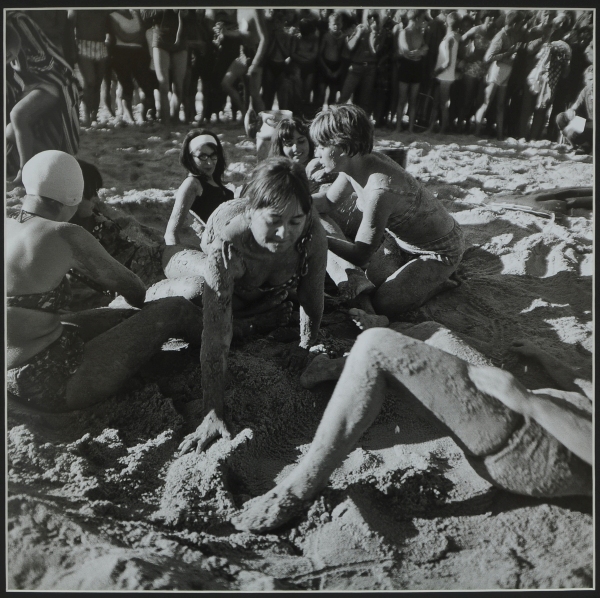
23 sierpnia 1967 roku odbył się Panoramiczny happening morski, uznawany za jeden z najważniejszych happeningów w powojennej historii sztuki Europy Środkowo-Wschodniej. Jedną z jego części był Barbujaż erotyczny (pozostałe trzy to Koncert morski, Tratwa Meduzy, Kultura agrarna na piasku). Polegał on na nurzaniu się kilku kobiet w mieszaninie piasku, sosu pomidorowego i oleju. Uczestniczki na polecenie Kantora rozcierały kleistą i tłustą maź, wykonując przy tym konwulsyjne i epileptyczne ruchy. „Całość ma robić wrażenie ruchliwej materii niezidentyfikowanej, gubiącej kontury i kształty ciał w totalnym asamblażu. W odpowiednim momencie ciała powinny wydzielić się z ogólnej masy i zmieszać z publicznością” – czytamy w partyturze happeningu przygotowanej przez artystę po jego wykonaniu. Bezformie zyskało tym samym nową postać, akcyjną zamiast formalistycznej, właściwej obrazom malowanym na płótnie. Instrumentalne wykorzystanie ciał, warto podkreślić – kobiecych, z dzisiejszej perspektywy ma wydźwięk mizoginistyczny, co korespondowało z opresyjnym traktowaniem kobiet przez Kantora. Bezkształtną przedmiotowość cielesnej materii artysta traktował jako rodzaj ready-made, nadając jej miano „realności niższej rangi”. Zestawienie malarskiej kompozycji (projektu scenograficznego) ze zdjęciem Eustachego Kossakowskiego skłania do zadania pytania o cielesność materii. Kantorowska redukcja kobiecej podmiotowości do ciała podporządkowanego męskim fantazjom budzi dzisiaj naturalny sprzeciw i skłania do krytyki w duchu feminizmu.
In English
Tadeusz Kantor
(Informelle Decoration No. 10), from the cycle Różne (Miscellaneous), 1957
mixed technique, paper
Eustachy Kossakowski
Panoramic Maritime Happening by Tadeusz Kantor, 1967/2017
black and white photography, digital print, baryte pape
Własność Muzeum w Koszalinie
Tadeusz Kantor combined visual arts and theatre in his work, blending the boundary between these two spheres. In 1955, he travelled to Paris, where he became acquainted with art informel, then widespread in Western Europe. He disseminated his experiences with this new art through lectures and publications, thus strengthening his image as a modern artist propagating an innovative approach to painting. His newly discovered technique of expressive and automatic image-making was popularised by the experimental film Uwaga!… Malarstwo (Attention!… Painting) (1957, directed by Mieczysław Waśkowski, cinematography by Antoni Nurzyński), produced in 1957 for the Second Exhibition of Modern Art in Warsaw. The film showed Kantor’s process of spontaneous composition painting. From this period comes the work Informelle Decoration No. 10, which straddles the border between informel gesture and theatrical scenography. Between 1960 and 1962, Kantor pursued the concept of informel theatre, which involved treating actors as equal to objects and depriving them of individuality. This was a theatre involving the movement of matter, in which chance played a decisive role. As the artist wrote in 1961: „The terms stage setting, decoration, scenography become useless and unnecessary in the new theatre. […] All that hides under these terms should merge with the theatrical whole until it is somehow completely dissolved in the general scenic matter. It should not be separately noticeable.” (My idea of theatre. From the theatre programme to Rhinoceros)
In 1965, Kantor organised his first happenings, and in doing so, he attempted to transcend the limitations of the traditional division between stage and audience. He treated the happening as a continuation of his previous artistic and theatrical activities, regarding the movement of bodies as painting material and the art-historical references as themes to be played out and updated.
On 23 August 1967, the Panoramic Maritime Happening took place. This is considered one of the most important happenings in the post-war Central and Eastern European art. One of its parts was Erotic Barbujaż (the other three were Maritime Concert, The Raft of the Medusa, Agrarian Culture on Sand). It consisted of several women immersing themselves in a mixture of sand, tomato sauce and oil. At Kantor’s command, the participants rubbed and spread this sticky and oily mixture while making convulsive and epileptic movements. „The whole is supposed to give the impression of moving, unidentified matter, losing the contours and shapes of the bodies in a total assemblage. At the right moment, the bodies should separate from the general mass and mix with the audience.” So reads the score of the happening prepared by the artist after its performance. Formlessness thus took on a new form, an action form instead of the formalist form inherent in paintings on canvas. From today’s perspective, it is worth emphasising how the instrumental use of bodies, female bodies, has misogynistic overtones, which align with Kantor’s oppressive treatment of women. The shapelessness of corporeal matter was treated by the artist as a kind of ready-made, which he called “a reality of a lower rank”. The juxtaposition of the painterly composition (stage design) with Eustachy Kossakowski’s photograph invites the question of the corporeality of material. Kantor’s reduction of female subjectivity to a body subordinated to male fantasies raises natural objections today and prompts criticism in the spirit of feminism.